Tasks
“Did anyone call the new family?”
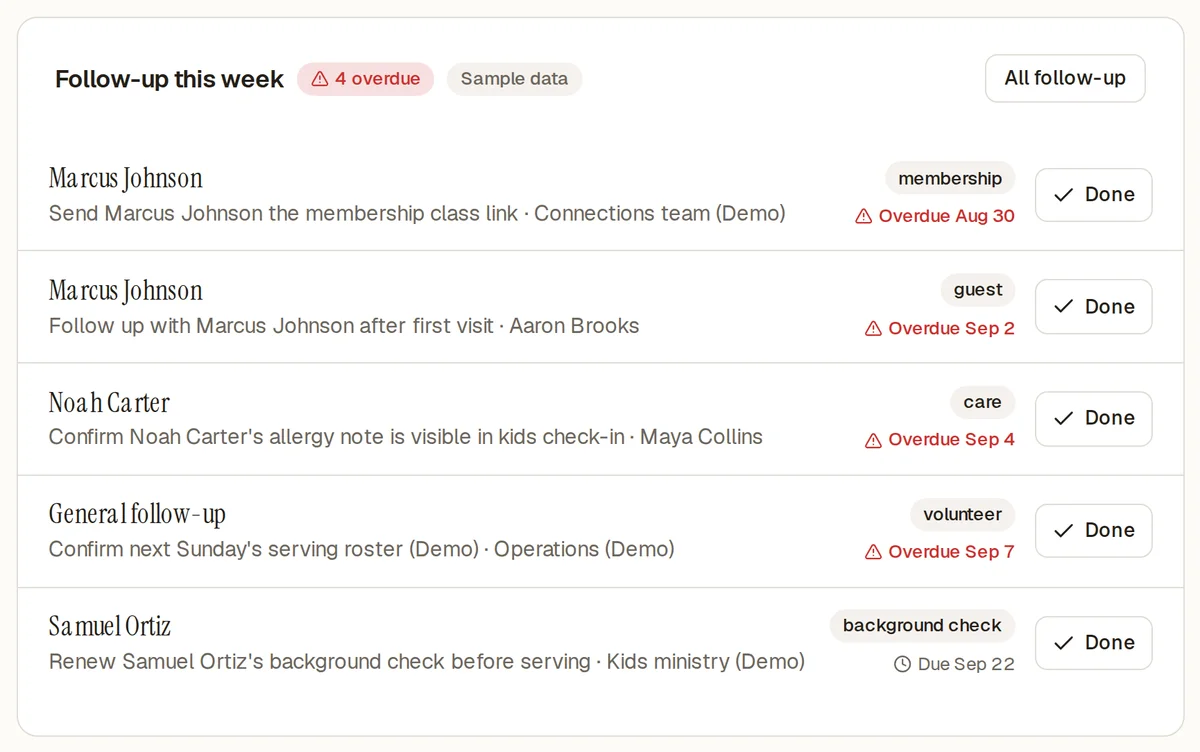
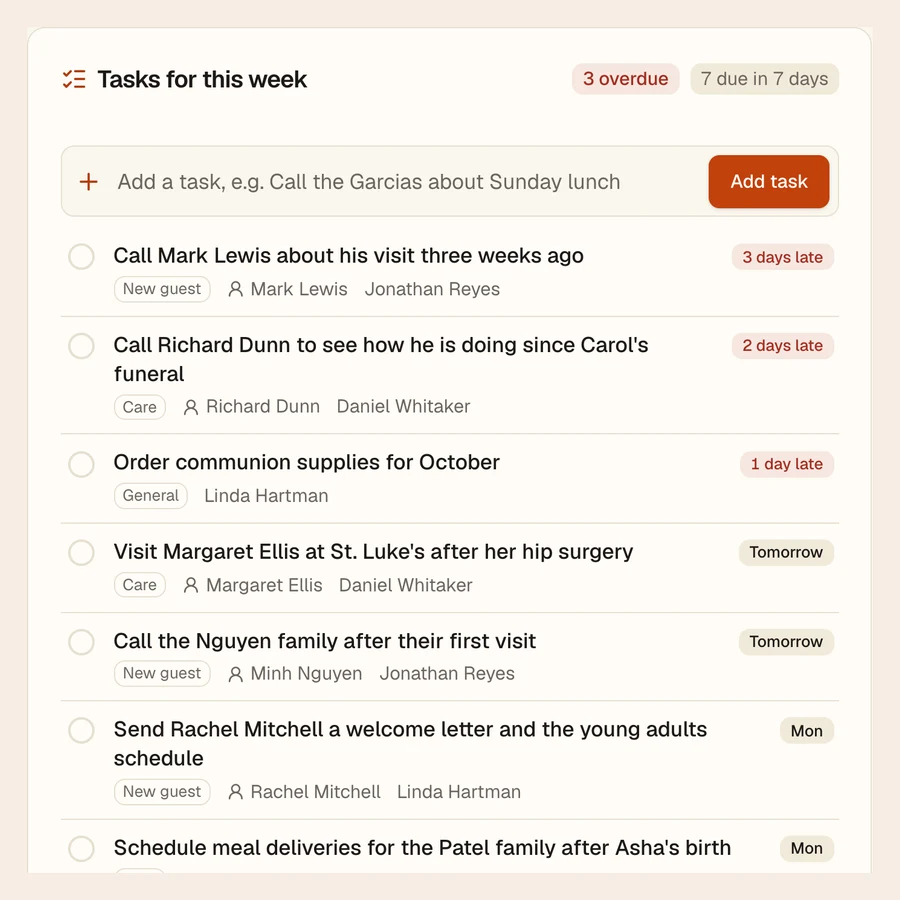
Now you know. Every guest gets an owner and a due date, and anything late turns red on the dashboard until someone makes the call.
Church management software for small churches · $19/month
If you've ever lain awake on a Saturday night wondering who you forgot to call back, this is for you.
It says everyone is fine. Meanwhile the family who visited three Sundays ago never got a call, and a regular hasn't been back in a month. SundayBridge shows you exactly who needs a person this week, before they're gone.
30 days free · no card required · then $19/month · cancel anytime
No star ratings yet. We're too new to have them, and we're not going to show you a badge we didn't earn. Judge it from the live sample church instead.
No borrowed logos, no “as seen in” badges we didn't earn. What we do have is our own research: 25,593 church websites, checked one at a time.
Built for small churches
Sunday services, the guest who needs a call, the kids' classroom, the volunteers who show up early. SundayBridge keeps track of all of it so the people who run the church can get back to the people.

Sunday services
Attendance, in two taps

First-time guests
Nobody leaves without a call

Kids ministry
Classes, rosters, background checks

Volunteers
Who's serving this Sunday

Events & groups
Potlucks to Bible studies

Care & outreach
Tasks with a name and a date

Small groups
Every member, every group

Community
Everyone in the directory

Worship
Serving teams and schedules
What churches say
Being straight with you: SundayBridge is new, and we don't have customer quotes yet. We could write some. Plenty of software companies do. We'd rather leave this space obviously empty than put words in a pastor's mouth — and when a real church is willing to be named here, their words go in exactly as they said them.




Using SundayBridge at your church? Tell us what it's actually like and we'll put your words here, unedited, with your church's name on them.
Email us →The 90-second tour
A real church's week in the actual app: the call nobody made, the regular who stopped coming, and the summary that writes itself.
The narration voice is AI-generated. The screens are the real app and its sample church.
30 days free · no card required · then $19/month · cancel anytime
Nobody tells you this
No goodbye. No angry email. They miss one Sunday, then three, and by the time anyone notices they've settled in somewhere else. It isn't a people problem. It's a memory problem, and memory is the first thing a busy week eats.

Sunday
A new family visits. Everyone is glad they came.

Tuesday
The greeter means to call. It's on a sticky note somewhere.
Three weeks later
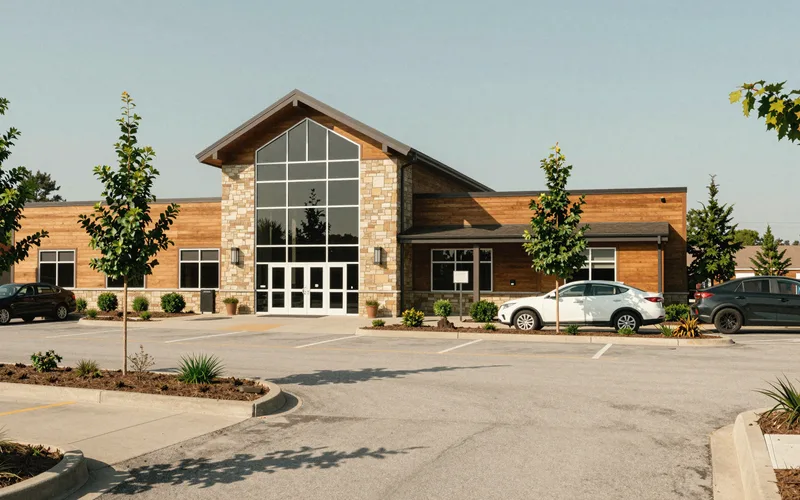
Nobody called. They're sitting in a different church now.
With SundayBridge, that visit becomes a task with a name and a date on it. Miss the date and it turns red on the dashboard until somebody makes the call.
One place
People, households, attendance, tasks, volunteers, care, giving records, and reports, in one login. $19 a month for all of it.
Tasks
Now you know. Every guest gets an owner and a due date, and anything late turns red on the dashboard until someone makes the call.
People & households
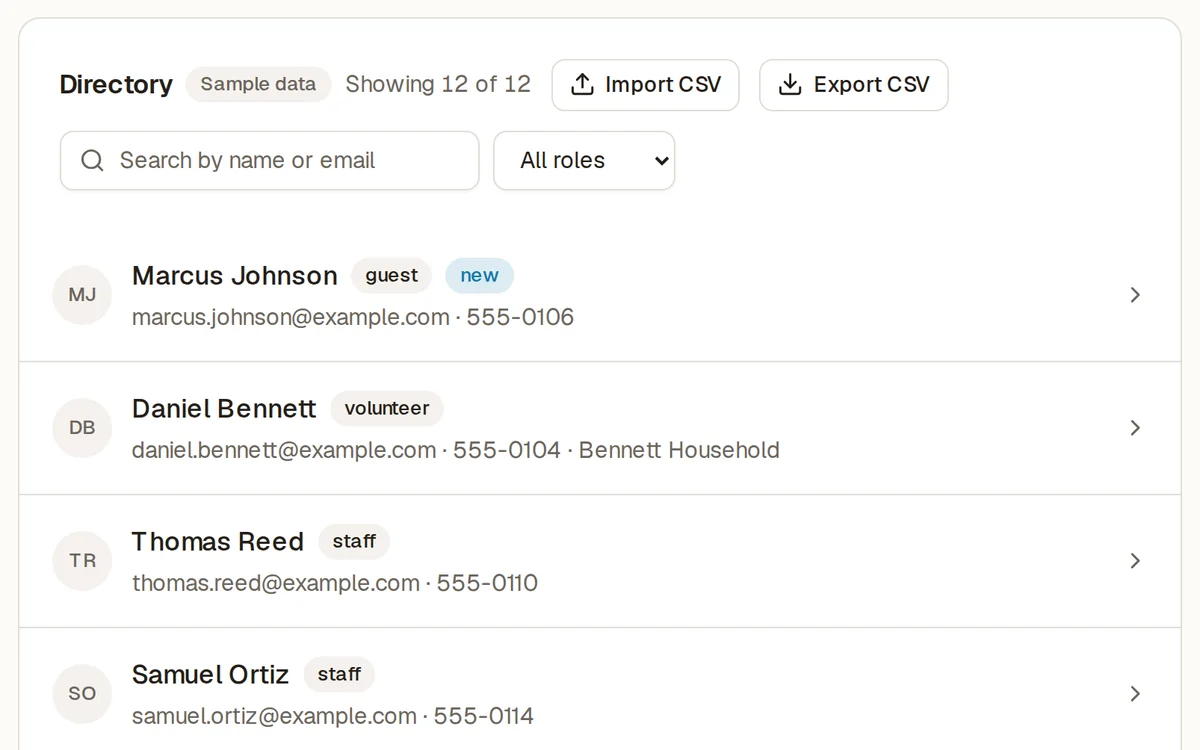
Household, groups, serving, attendance, and care in a single profile. Bring your spreadsheet in, and export it whenever you like.
Attendance
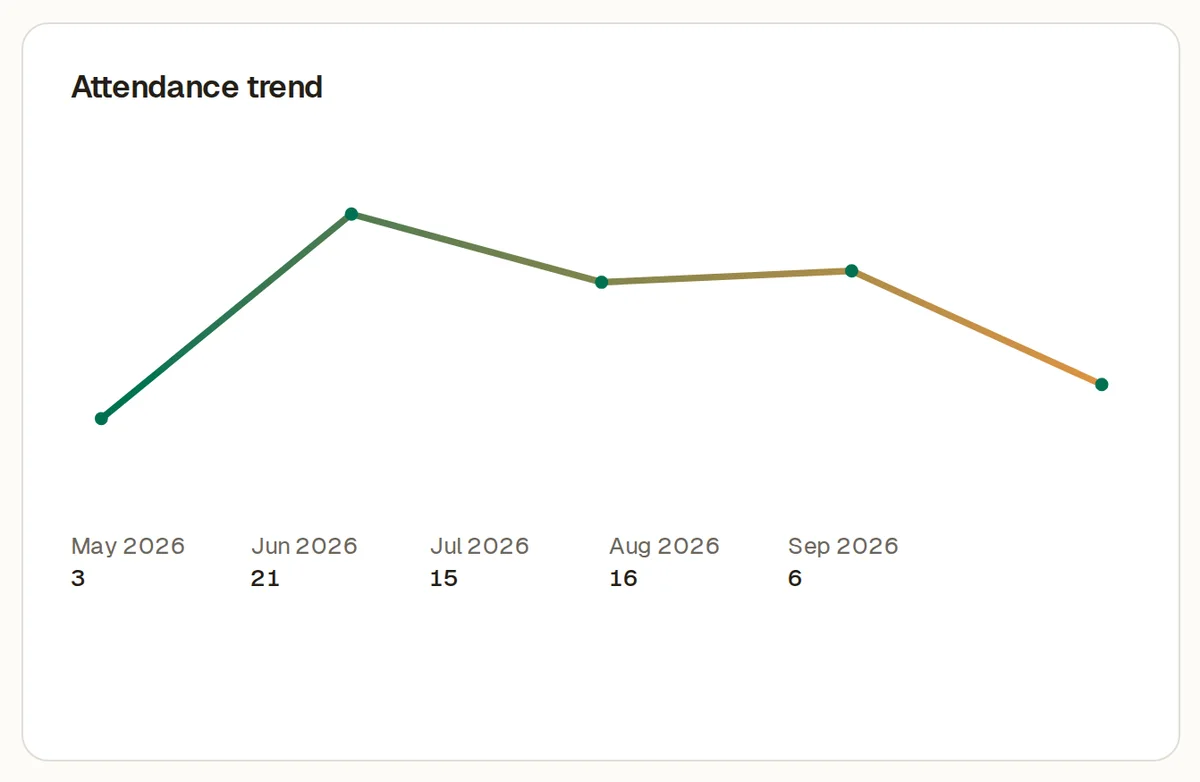
Take a named roster or a quick headcount, then see the trend against your own history. One slow Sunday stops feeling like a crisis.
Volunteers
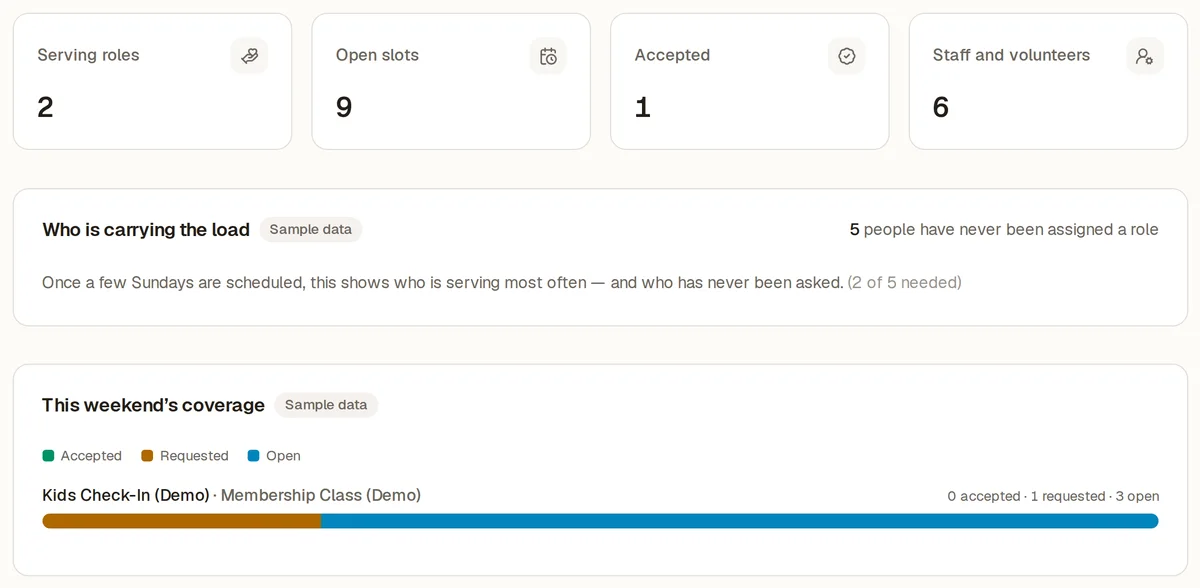
See who's carrying the load, and who has never once been asked to serve. They might say yes.
Pastoral care
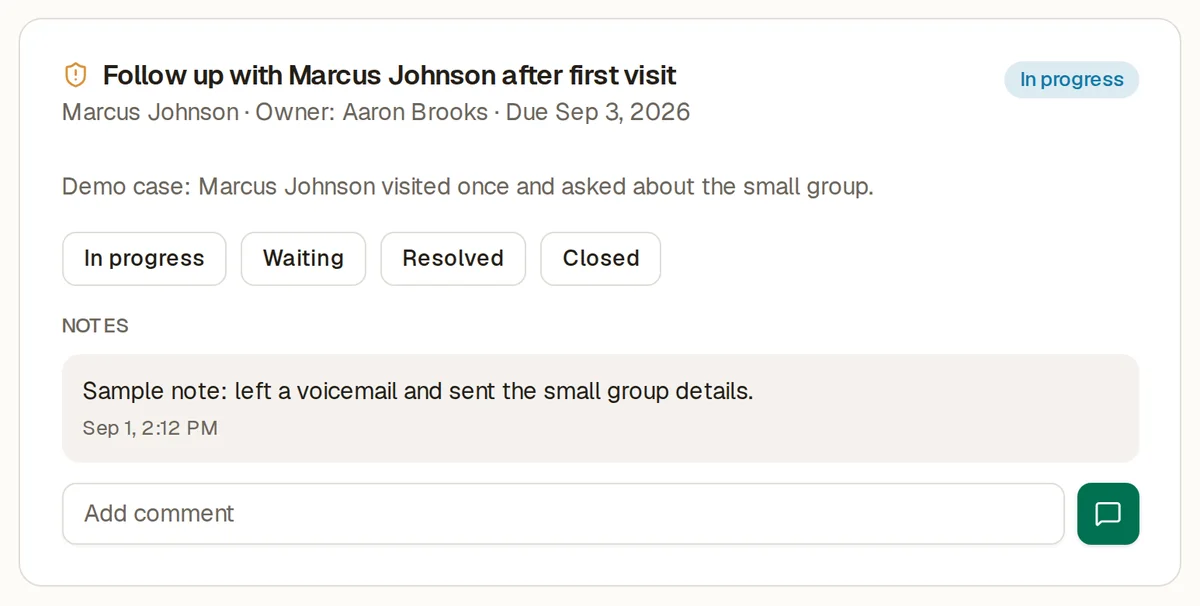
Private care cases with notes and history, kept next to the person instead of in your memory.
Giving records
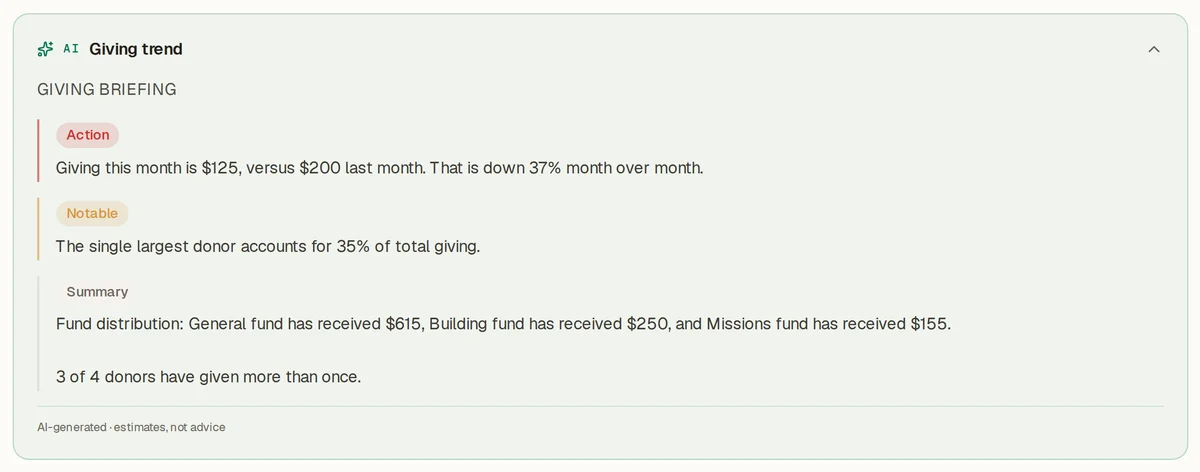
Record gifts, set a goal, and print statements when people ask. Giving records stay tidy and stay yours.
Also included: groups, gatherings, Sunday school, and twelve reports that export to CSV. See every module →
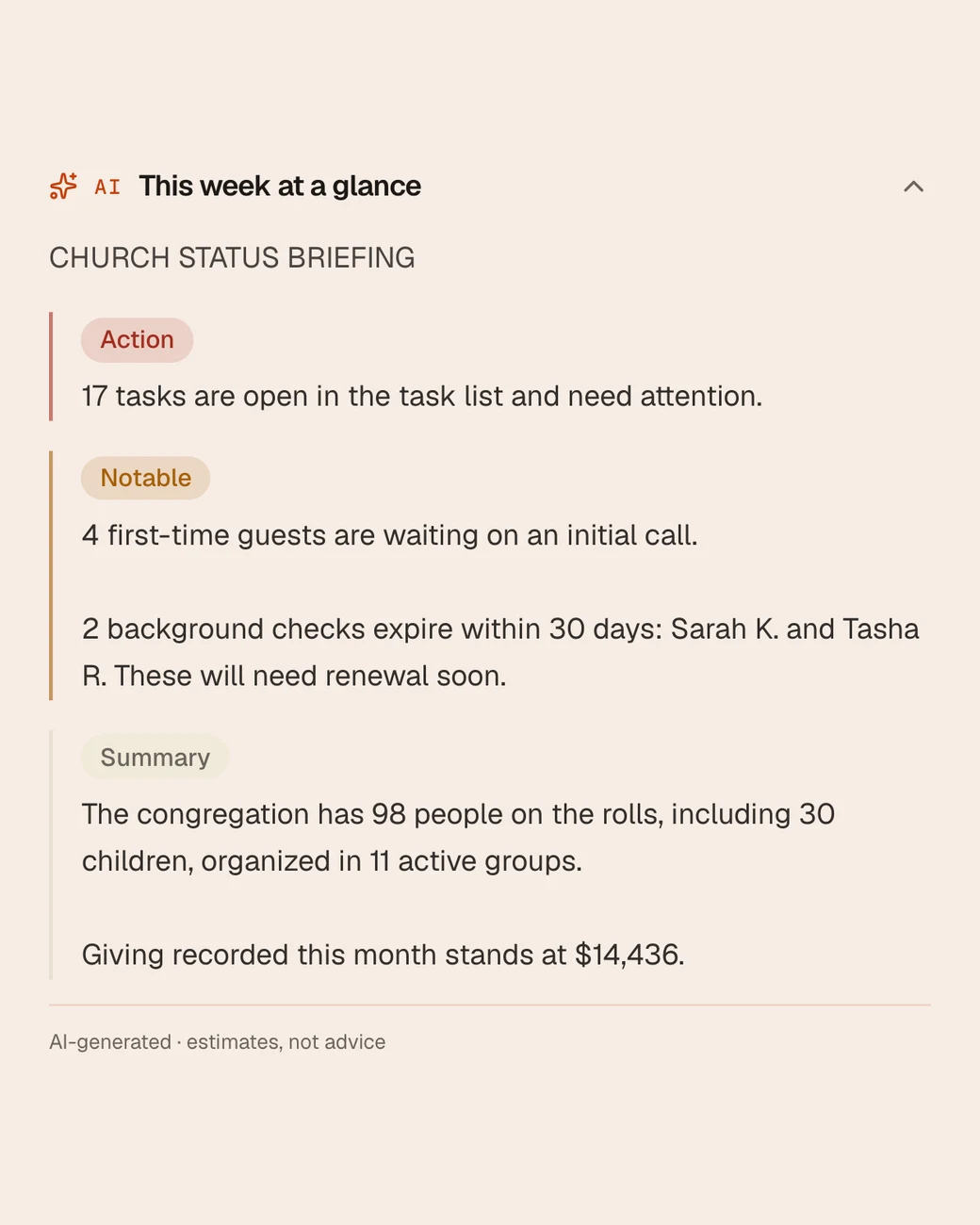
“Which regulars have quietly stopped coming?”
Answered from your own attendance records, with numbers it is not allowed to invent.
Ask AI · included
Ask a plain-English question and get an answer in a sentence, pulled from the records you already keep. No report to build. No export.
10 questions a month are included. No AI upsell. How the AI stays honest →
Our own research
Most small churches are running on spreadsheets, sticky notes, and one very tired volunteer. That's who we built SundayBridge for. We're new, so we won't fake testimonials. Open the sample church and judge it yourself.
25,593
US church websites scanned
62%
showed no church software
$19
a month, flat, for everything
30 days
free, and we never ask for a card
Built for exactly one person
The church secretary
who is also the database, the calendar, and the only person who knows the Wi-Fi password.

The bi-vocational pastor
doing pastoral care at 9pm, after a full day at a different job.
The volunteer who is honestly done
with apps built for megachurches. This one is built for one person to run, not an IT committee.
Before you pick anything
1
Per-member pricing taxes your growth.
Every new family makes the bill go up. SundayBridge is $19 a month flat, whether you have forty people or four hundred.
2
If your volunteers won't open it, it doesn't exist.
Pick the tool that reads like this week's to-do list, not an accounting system.
3
Try it on a full church before you type in yours.
That's why our sample church needs no signup, no card, and no sales call.
Pricing
30 days free · no card required · then $19/month · cancel anytime
Switching
We know what you're actually afraid of, and it isn't $19. It's spending a Saturday moving four years of directory into a new system and discovering on Sunday that half the households came through wrong. So here is exactly how the import works, with nothing glossed.
If your export is a mess, send it to us. We'll get it in for you, free.
That's not a sales gimmick with a minimum church size on it. Reply to any email from us and a human answers within one business day.
Walkthroughs for the system you're leaving
This is the directory after an import, in the live sample church. Open it and click around — no signup.
Your data never stops being yours, either: the directory and all twelve reports export back to CSV whenever you want them, including on the way out.
Start today and you'll know exactly who to call before next Sunday.
30 days free · no card required · then $19/month · cancel anytime